







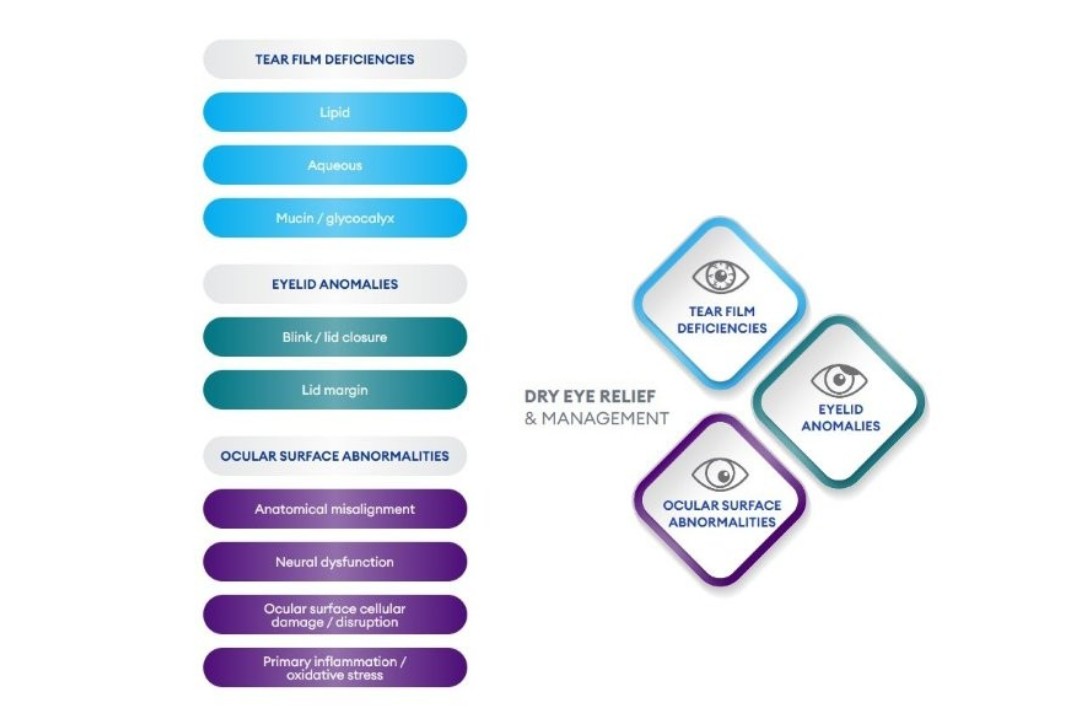
The World Council of Optometry (WCO) and Alcon have launched a new interactive tool, the Dry Eye Management Map, to support optometrists in navigating dry eye disease (DED) management.
Merging the latest Tear Film and Ocular Surface Society Dry Eye Workshop III (TFOS DEWS III) guidance with ease of use, the Dry Eye Management Map quickly generates relevant management approaches based on evidence-based options. An optometrist starts by choosing from three categories of underlying dry eye drivers – tear film deficiencies, eyelid anomalies and ocular surface abnormalities – as well as corresponding sub-drivers. Multiple selections are enabled for more comprehensive care. These inputs create a menu of potential management options for consideration, alongside standard and advanced testing options, WCO said.
The resulting report represents a concise overview of the recommended and optometrist-selected DED management pathway. A built-in email function allows each summary to be emailed for later review and/or incorporation into patient records. While the tool supports clinical decision making, the optometrist retains full medical judgment and remains the ultimate decisionmaker in determining the appropriate course of care, WCO added.
“Optometrists are always looking for the most up-to-date and effective way to diagnose and manage their patients, especially when they’re suffering from a complex chronic disease that can lead to further complications if left unmanaged,” said WCO president Cindy Tromans. “The Dry Eye Management Map will provide a critical and valuable resource for clinicians and educators worldwide. By using this tool in daily practice, they can more easily create and evaluate customised management plans based on specific contributing factors.”
The Dry Eye Management Map is currently available in English, with additional languages expected in the coming months. This latest digital toolset complements the multi-language WCO Alcon Dry Eye Wheel, which uses a three-step approach to managing dry eye: mitigation, measurement and management, WCO concluded.
The Dry Eye Management Map and more information about the initiative can be found at dryeye.worldcouncilofoptometry.info.